
😍🏡 What is the typical American dream home like? 🏡😍
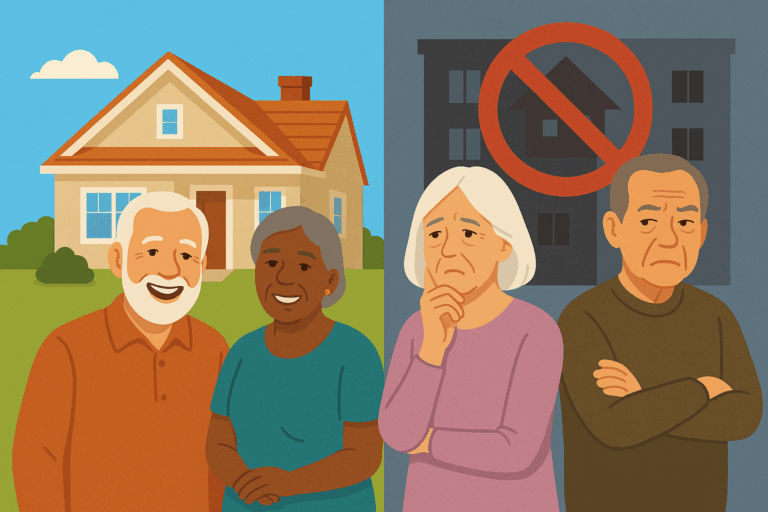
The typical American’s dream home is a custom new-build home that costs at least $500,000, spanning more than 2,000 square feet. Only 47% of Americans, however, think they’ll ever actually own their dream home, and just 28% think they could afford their dream home today.
Only Half Think They’ll Own Their Dream Home Someday | Location vs. Features in a Dream Home | Most Popular Dream Home Styles, Sizes | A Tour of the American Dream Home | Generational Differences in Dream Homes | Homeowners vs. Renters on Their Dream Homes
There are few things that impact our day-to-day lives more than our homes. They can run the gamut from a functional, roomy oasis of peace and beauty to a cramped, dark, poorly maintained burden that inspires more dread than comfort upon returning.
Regardless of your home’s conditions, chances are you’ve spent a little time daydreaming about what your ideal space might look like and include — and where it might be located.
The answers are naturally highly personal and subjective. Still, there’s no denying some major trends and general preferences shape what Americans want in a home in 2025.
Clever Offers surveyed 1,000 Americans to find out more about their dream homes, ranging from how many square feet they want to the biggest dealbreakers and their ideal decorating scheme.
Based on the most common responses, the typical American’s dream home is a custom new-build, ranch-style home that costs at least $500,000, spanning over 2,000 square feet, with scenic views of the countryside or water, along with plentiful outdoor space.
Other significant preferences also emerged: 70% of Americans would rather have a less-than-ideal home in their ideal location than a true dream home in a less desirable place. In addition, approximately 76% would prefer a low-maintenance home over a high-end dream home that’s harder to maintain.
Meanwhile, Americans are roughly split down the middle between those who think they’ll ever own their dream home (47%) and those who think it’ll remain an elusive fantasy (53%).
Read on as we take a deep dive into the diverse and sometimes contradictory desires of Americans in their dream homes.
🏡 Dream Home Statistics
- Two-thirds of Americans (66%) would feel more confident in their dream home, and 60% think living in a beautiful home would improve their quality of life.
- Just 28% of Americans think they could afford their dream home today, and fewer than half (47%) think they’ll ever live in their dream home.
- Over three-quarters of respondents (76%) would prefer a low-maintenance home over a high-end dream home that is harder to maintain.
- The three most common dealbreakers for a potential dream home are a property with a history of damage (24%) — such as foundation issues, a fire, or water issues — a property with bad neighbors (24%), or a property in a flood zone or wildfire-prone area (24%).
- Approximately 70% of Americans would rather have a less-than-ideal home in their ideal location than a true dream home in a less desirable place.
- If money were no object, Americans would most commonly pick a dream house in the countryside (44%), on the beach or the coast (41%), or on a lake (41%).
- If money were no object, nearly half of Americans (43%) say they would prefer to live in a custom new build, more than double the next most common choice, a historic home with character (19%).
- Stylewise, one-story ranch homes (38%) are the most popular, followed by farmhouse-style properties (32%) and contemporary or modern homes (29%).
- Two-thirds of Americans (67%) would look for a dream home over 2,000 square feet, and nearly 1 in 10 (9%) are seeking an especially spacious 5,000-square-foot-plus dream home.
- In comparison, 2 in 3 Americans (66%) say their current homes are smaller than 2,000 square feet, and almost half (45%) are under 1,500 square feet.
- 90% of Americans would like their dream home to have scenic views, with roughly a third (32%) considering it a make-or-break essential.
- Over three-quarters of Americans (77%) say they’d rather have a home that’s highly functional over one that's aesthetically pleasing.
- The most common “must-have” features in a home are a fenced-in yard (46%), a back patio (45%), and a front porch (44%).
- 57% of zoomers and 53% of millennials believe owning a bigger or more luxurious home would make them happier, roughly 3x the number of boomers who share this feeling (18%).
Only Half of Americans Think They’ll Own Their Dream Home Someday
To understand what Americans are looking for in a dream home, it’s critical to first understand their feelings about their current living situations. Over two-thirds (69%) are happy in their current home, and only 41% think owning a bigger or more luxurious home would make them happier.
Still, 66% would feel more confident in their dream home, and 60% think living in a beautiful home would improve their quality of life.
However, Americans are still relatively cautious about what they’d do to end up there, with only 1 in 4 (25%) saying they’d still buy their dream home if it cost more than they could afford.
On the other hand, 61% of respondents — including 69% of Gen Zers but only 54% of boomers — would sacrifice other luxuries, such as vacations and a nice car, if it meant being able to buy their dream home.
About 1 in 4 Americans (28%) say they have the income and savings to afford their dream home today, and 47% think they’ll actually own their dream home someday.
Unfortunately, a 53% majority think their dream home will remain just that — a dream.
A lucky 1 in 5 (21%) say they already live in their dream home, whether it’s an objectively luxurious and well-designed property or simply the result of satisfaction with their circumstances.
Among those who don’t think they’ll ever own their dream property, the leading reason is, unsurprisingly, that don't think they'll ever be able to afford it (68%).
Other reasons Americans don't think they'll ever own their dream home include:
- It's unrealistic to purchase (40%)
- It would be too expensive to maintain (37%)
- It would require too much upkeep and maintenance (21%)
- They don't want to deal with the hassle and expense of moving (20%)
- They are too comfortable in their current home (19%)
Three-Quarters of Americans Think Their Dream Home Currently Exists
Although some Americans likely envision a one-of-a-kind dream home built specifically for their needs and preferences, most do not. Almost three-quarters (74%) think their dream home already exists.
Whether it’s currently a reality or not, many respondents describe their dream homes in similar ways. Two-thirds (66%) call them “comfortable,” while 58% describe them as “peaceful,” and about half (49%) say they’re “cozy.”
Unfortunately, far fewer use these terms when considering their current homes: Just 50% say they’re comfortable, 32% say they’re peaceful, and 31% say they’re cozy. There’s also a massive 23-percentage-point gap between those who are seeking a dream home that’s private (39%) and those who describe their current living space in the same way (16%).
For many, pets are as much a part of their family as any other member. That’s why 65% say they’d take their pets into account when shopping for their dream home. This could include anything from a large yard or private outdoor space to special features, or even rooms, dedicated to their furry friends.
In addition, it appears a true dream home experience doesn’t just involve living there — they need to own it, too. Only 43% of Americans would consider renting instead of buying if it meant they could live in their dream home.
Barely a quarter of boomers (27%) fall into this group, showing just how much older generations prioritize homeownership. In contrast, 56% of Gen Z and 49% of millennials, who are more likely to currently rent or have rented more recently, would be open to renting their dream home.
With this in mind, many better start saving. Half of Americans (50%) think their dream home would sell for at least $500,000, while nearly 1 in 5 (18%) foresee their dream property costing $1 million or more.
However, only 21% of Americans could afford a half-million-dollar home, and just 6% think they could buy a million-dollar one. Looking ahead, only 28% say they realistically think they could ever afford a $500,000 home in the future.
Americans are wary that even a dream home can turn into a nightmare if things start going wrong. Over three-quarters (76%) would prefer a low-maintenance home over a high-end dream home that is harder to maintain.
Even when considering a potential dream home, Americans seem willing to concede that nowhere is perfect. They would be most willing to compromise on the following to afford their dream home:
- Size and acreage of the property (49%)
- Neighborhood amenities (42%)
- Size of home and square footage (39%)
- Age or condition of the home (33%)
- Number of bedrooms (31%)
History of Damage, Bad Neighbors, and Natural Disaster Risks Are the Biggest Dream Home Dealbreakers
Although many Americans are willing to compromise to afford their dream home, there are certain things that are dealbreakers, even if a property would otherwise qualify as their dream home.
When asked to select their top three, Americans say their dealbreakers in a potential dream home are:
- A home with a history of damage, such as foundation issues, a fire, or water issues (24%)
- A home with bad neighbors (24%)
- A home in a flood zone or wildfire-prone area (24%)
- High property taxes (22%)
- High insurance costs (16%)
Notably, Americans are slightly more likely to say a home in an HOA is a dealbreaker (20%) than a home where a serious crime was committed (19%) or a home that backs up to a major highway or train tracks (19%).
Dream home dealbreakers can also vary significantly by generation. Boomers report a roughly four-way tie between being in a flood zone or wildfire-prone area (30%), being too close to an undesirable site such as a chemical plant (30%), a home with a history of damage (29%), and bad neighbors (27%).
Meanwhile, millennials and Gen Zers have a far wider range of potential dealbreakers. Among all generations, millennials (22%) are the most concerned about a house where a serious crime occurred , while Gen Z (24%) is at least 3x more likely than older generations to say the lot being too small would be a dealbreaker.
Although still uncommon, millennials (10%) and Gen Z (13%) are at least 2x more likely than boomers (4%) to say state or local politics they strongly disagree with would be a dealbreaker for their dream home.
70% of Americans Prefer Desirable Location Over True 'Dream Home'
It’s hard to overstate the importance of the right location in making a dream home a true dream. Approximately 70% of Americans would rather have a less-than-ideal home in their ideal location than a true dream home in a less desirable place.
Similarly, 53% say location or neighborhood is the most important factor in a dream home, significantly higher than size and space (29%) or style and design (18%).
If money weren’t a factor, only about a third (35%) say their dream home would be located in the same city they currently live in. Another quarter (25%) would pick a different city in the same state, while 31% see their dream home in a different state. Meanwhile, an adventurous 9% would like their dream home abroad.
Boomers (43%) and millennials (34%) are most likely to stay put in their current city, while Gen Z is most likely to say their dream home requires a move to a different state (36%).
Around 64% of Americans would be willing to move to a different city or state to live in their dream home. That would represent a huge life change for many. Research has found that nearly 6 in 10 young adults live within 10 miles of where they grew up, and the typical American lives fewer than 20 miles from their parents.
Americans Would Prefer to Live in the Countryside, on a Coast, or Lakeside
If money were no object, Americans' ideal dream home setting would be:
- Countryside (44%)
- Beach or the coast (41%)
- Lake (41%)
- Mountains (35%)
- Small town (33%)
- Suburbs (32%)
- Forest or wooded area (31%)
By far, the least popular setting is the desert. Just 1 in 25 Americans (4%) would choose a dream home in these often beautiful but inhospitable locations.
Americans Are Nearly Unanimous in Their Desire for an Area With Low Crime and Easy Access to Medical Care
It’s hard for pretty much all Americans to imagine a dream home where they’re constantly looking over their shoulder due to the risk of crime.
An overwhelming 95% say they want their dream home to be in a low-crime area, with 70% saying it’s a must-have. It’s the highest must-have percentage by a whopping 18 points, showing just how much more important safety is than any other factor.
Other popular aspects of a dream neighborhood include easy access to medical facilities and hospitals (91%) and avoiding a flood or wildfire zone (89%). This latter factor is considered a must-have for more than half of Americans (52%).
Beyond this, Americans have a diverse, wide-ranging, and potentially conflicting set of wants in their dream neighborhood:
- Near parks/green space (83%)
- Easy access to major roads/highways (83%)
- Walkable neighborhood near shopping and restaurants (82%)
- Neighborhood with sidewalks (81%)
- Near water, such as a lake, ocean, or river (78%)
- Close to friends/family (78%)
- Short commute to work (76%)
Boomers Want Easy Access to Medical Facilities, While Millennials and Gen Zers Want a Good School District and Short Commutes
Older and younger Americans differ in some important ways in how they imagine their dream neighborhoods. Certain desires make sense when considering the different needs of varying generations.
For example, aging boomers (96%) are more likely to desire a neighborhood with easy access to medical facilities and hospitals, compared to millennials (88%) and Gen Z (86%).
Meanwhile, more zoomers (78%) and millennials (75%) prioritize a good school district, as they’re more likely to have school-age children than boomers (39%). These younger Americans also more commonly want a neighborhood that’s a short commute to work, with 83% of millennials and 71% of Gen Zers saying so, compared to 64% of retirement-age boomers.
In other cases, it’s simply a matter of differing desires and dreams. Gen Z (74%) and millennials (64%) prioritize access to public transportation in their dream neighborhood substantially more than boomers (42%).
The same goes for closeness to a major city (71% of millennials, 67% of Gen Z, and 60% of boomers), easy access to an airport (67% of Gen Z, 58% of millennials, and 52% of boomers), and a community with amenities such as a pool or clubhouse (71% of Gen Z, 62% of millennials, and 50% of boomers).
The most common type of dream neighborhood Americans envision is one that’s quiet and private (39%). It’s selected about twice as often as a community that’s walkable with shops and restaurants nearby (20%) or a rural or remote one with lots of land (19%).
Fewer than 1 in 10 (9%) see their dream home in a close-knit community that hosts block parties, picnics, and other neighborhood events.
Although quiet and private neighborhoods are preferred most by all generations, other age groups show more interest in the alternatives than boomers.
| What kind of neighborhood do you most envision for your dream home? | Boomers | Gen Xers | Millennials | Gen Zers |
| Quiet and private | 49% | 38% | 38% | 35% |
| Walkable with shops/restaurants nearby | 17% | 21% | 20% | 24% |
| Rural/remote with lots of land | 17% | 21% | 18% | 18% |
| Close-knit community (e.g., block parties, community picnics, etc.) | 10% | 9% | 8% | 10% |
| Luxury community with amenities | 7% | 11% | 17% | 14% |
Custom New Builds, Ranch-Style Homes Are the Most Popular Dream Properties
If money were no object, nearly half of Americans (43%) say they would prefer to live in a custom new build, more than double the next most common choice, a historic home with character (19%).
Barely 1 in 8 apiece would choose a fixer-upper they could renovate (13%), a non-custom new construction home (13%), or a modern luxury condo (13%).
Stylewise, one-story ranch homes (38%) are the most popular, followed by farmhouse-style properties (32%) and contemporary or modern homes (29%).
Conversely, Spanish revival (7%), Georgian (7%), houseboats (5%), and adobe homes (4%) are the least desired dream home styles.
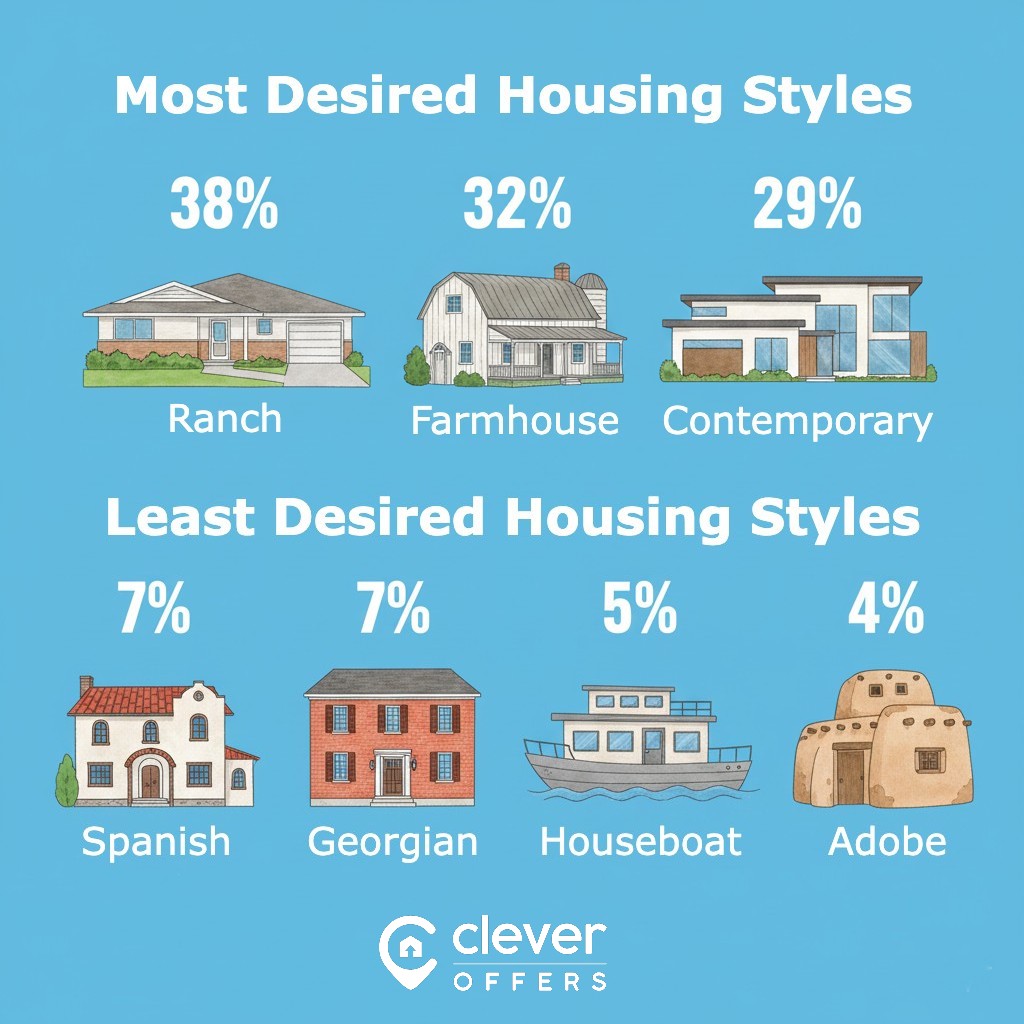
Ranches are most popular among boomers (53%) and Gen X (40%), likely reflecting their desire to avoid stairs as they age. However, millennials are tied at 32% apiece for ranch homes and farmhouse-style ones.
Gen Z apparently has a taste for the finer things, with 31% picking a penthouse suite or luxury condo, 10 percentage points higher than millennials (21%) and more than double Gen X (15%) and boomers (14%). Gen Z is also far more likely to choose a townhouse or row house as their dream home (19%), compared to millennials (15%), Gen X (9%), and boomers (9%).
Generally speaking, younger Americans are far more willing to pick more unusual options than their older counterparts. They are also more likely to choose a custom or non-standard design (14%), such as shipping containers, a barndominium, or an earthship. Only 5% of boomers or Gen X would select this off-beat option.
1 in 5 Americans Want Three Floors or More in Their Dream Home, and 1 in 10 Are Looking for 5,000+ Square Feet
Sizewise, most Americans are satisfied with a traditional one-story (35%) or two-story property (46%), but 1 in 5 (20%) would still prefer three or more levels.
Meanwhile, two-thirds (67%) would look for a dream home over 2,000 square feet, and over a third (39%) want 3,000 square feet or more. Nearly 1 in 10 (9%) want at least 5,000 square feet in their dream home.
This is a far cry from their current living situations: 2 in 3 Americans (66%) say their current homes are smaller than 2,000 square feet, and almost half (45%) are under 1,500 square feet.
Nationwide, the median home size sits between 1,800 and 1,900 square feet, with new construction properties slightly higher in the 2,100 range. Both have fallen in recent years.
Within this spacious interior, 82% of Americans would prefer at least three bedrooms, while nearly half (42%) would prefer four or more bedrooms.
Similarly, 61% of Americans imagine their dream home with three or more bathrooms. Only 30% of respondents currently have that many.
Of course, a dream home often includes much more space than just the home’s interior. Just over half of Americans (53%) want a property of a half-acre or more, with 1 in 8 (12%) seeking a substantial estate of five acres or more. This is a significant upgrade from their current conditions, where 63% live on a quarter-acre or less.
Despite the lower maintenance requirements, only 16% see their dream home as having no land at all, such as a condo or apartment, or just a small lawn, patio, or deck space, like in a townhouse.
A Tour of the Typical American Dream Home
We begin outside, where Americans tend to have the least consensus about their home’s appearance.
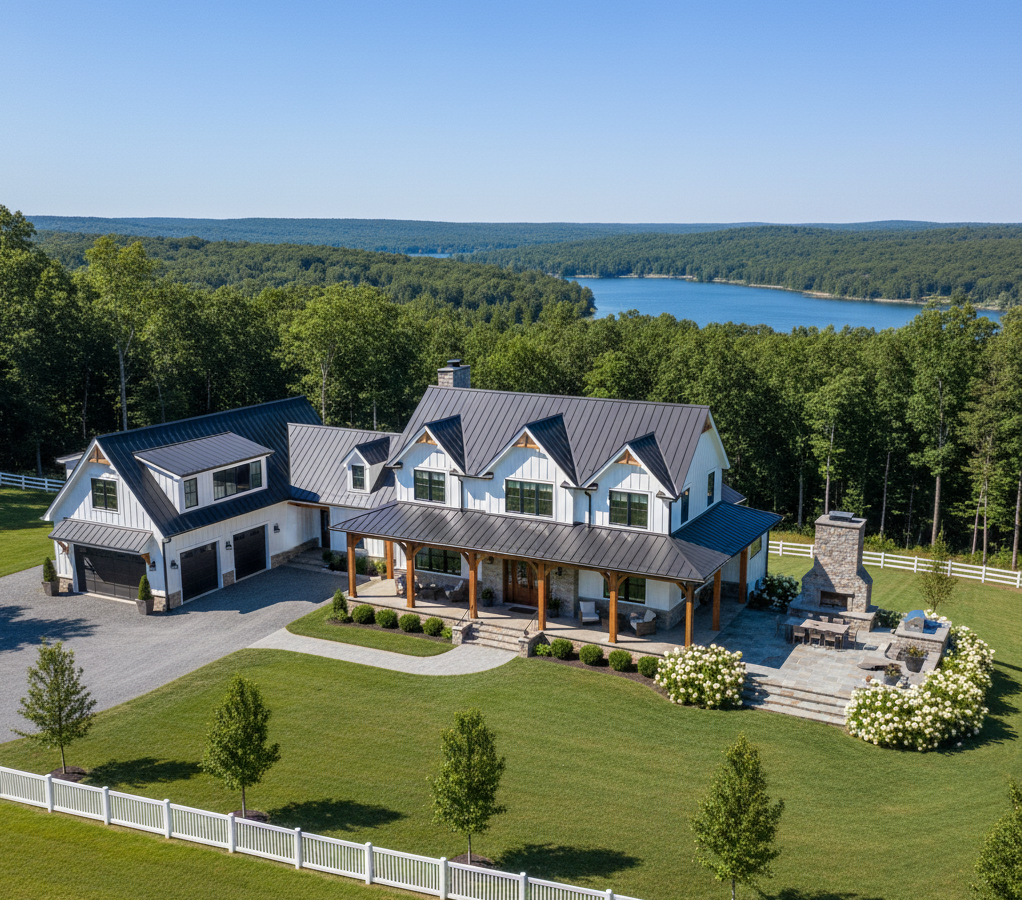
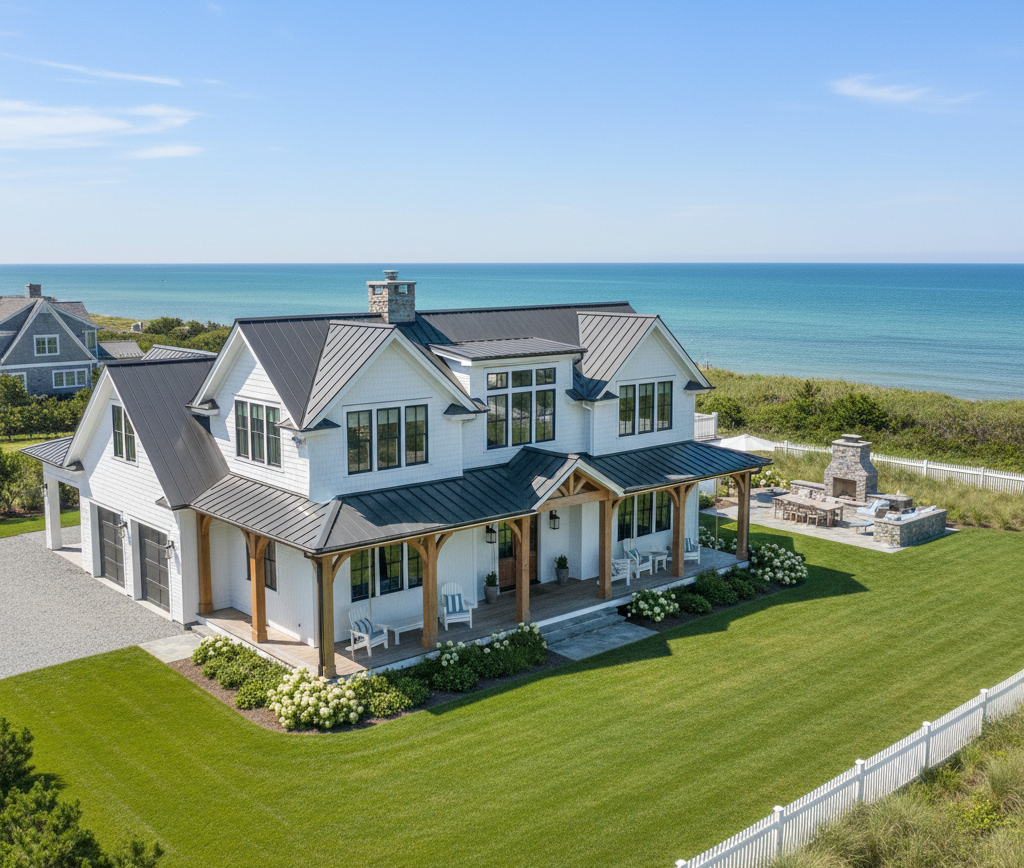
Beyond the preference for a ranch or farmhouse-style property, 21% prefer light neutrals, such as whites and beiges for the exterior color, while 19% apiece would prefer cool tones of gray, blue, and green, or natural finishes like wood or stone.
Warm tones, such as earthy browns, reds, and oranges (17%) and dark neutrals, such as blacks, charcoals, and deep browns (16%), aren’t far behind.
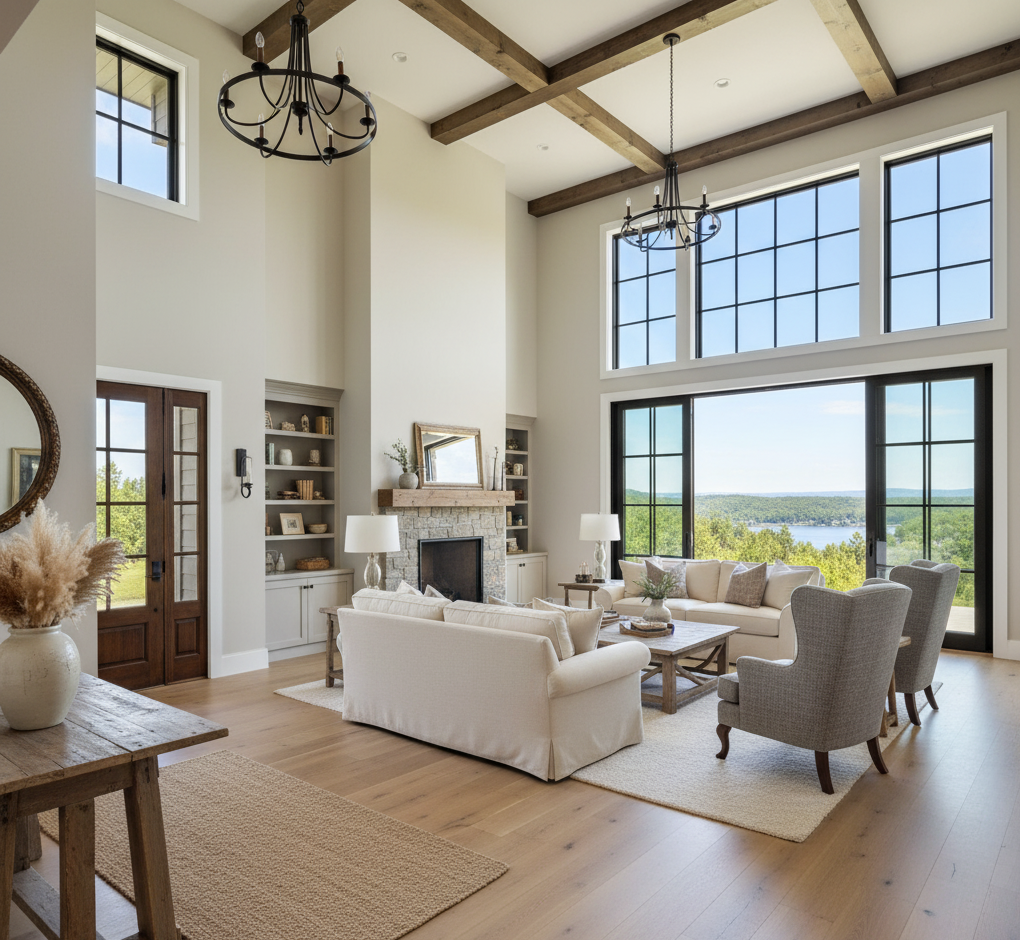
Moving indoors, 41% say their dream home would have a cozy or traditional interior style. That’s almost double the number who are seeking a modern or contemporary dream home interior (22%). Nearly 1 in 5 (18%) would opt for a rustic or natural look.
Boomers (53%) are far more likely to opt for cozy or traditional styles than Gen Z (39%) and millennials (37%). Gen Z (21%) is more likely than boomers (6%) to prefer an eclectic or colorful style, while millennials (27%) are more likely than boomers (16%) to want a modern luxury style.
Regardless of their preferred styles, Americans imagine plenty of light neutrals (34%) in their living areas. They’re picked substantially more often than cool tones (19%) and warm browns, reds, and oranges (19%).
Our tour then progresses to the kitchen, the heart of the home for many families. In these heavily used, versatile spaces, over a third (34%) opt for the increasingly trendy light neutrals of white and beige, nearly double the next most common choice, cool tones of gray, blue, and green (18%).
For 61% of Americans, their dream kitchen includes a walk-in pantry, while about half are also looking for a large island (47%) or extra storage (45%). Over a third would also include a breakfast nook or eating space (36%) or high-end countertops (34%).
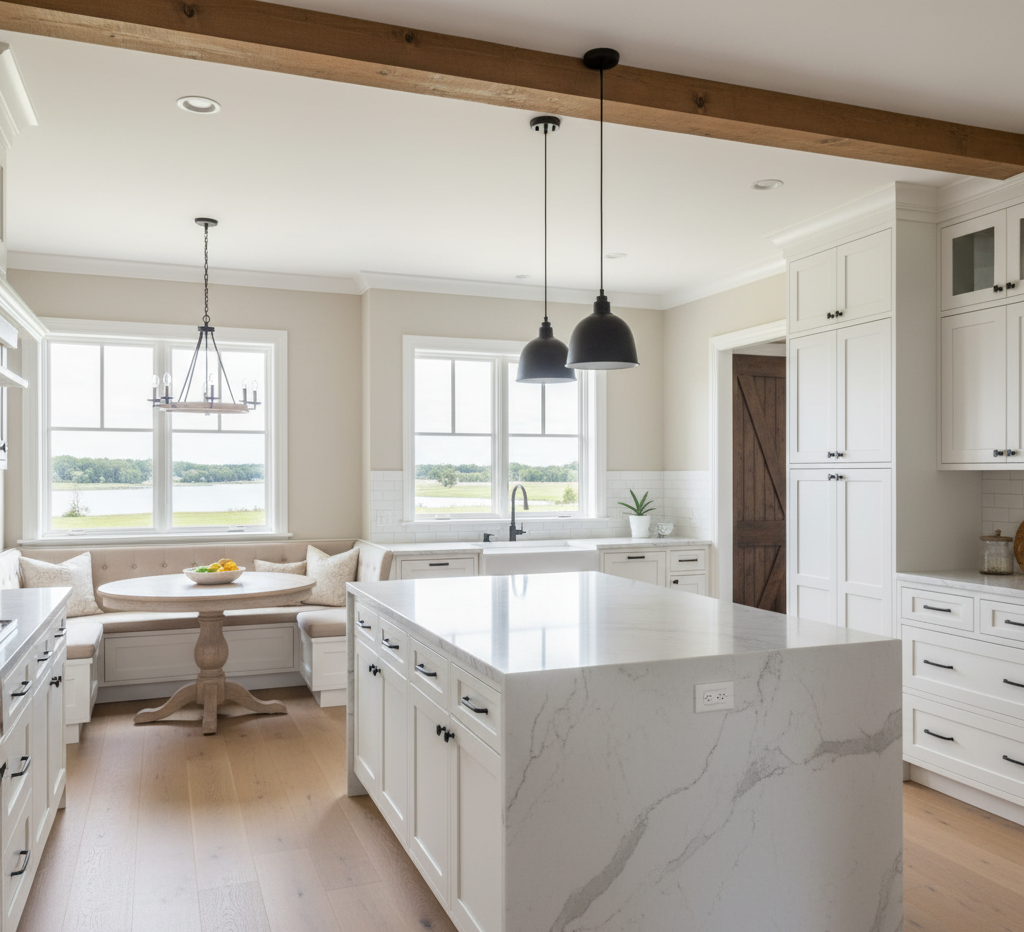
At the end of the day, the typical American living in their dream home retires to a luxurious master suite, decorated most commonly in light neutrals for both dream home bedrooms (31%) and bathrooms (35%).
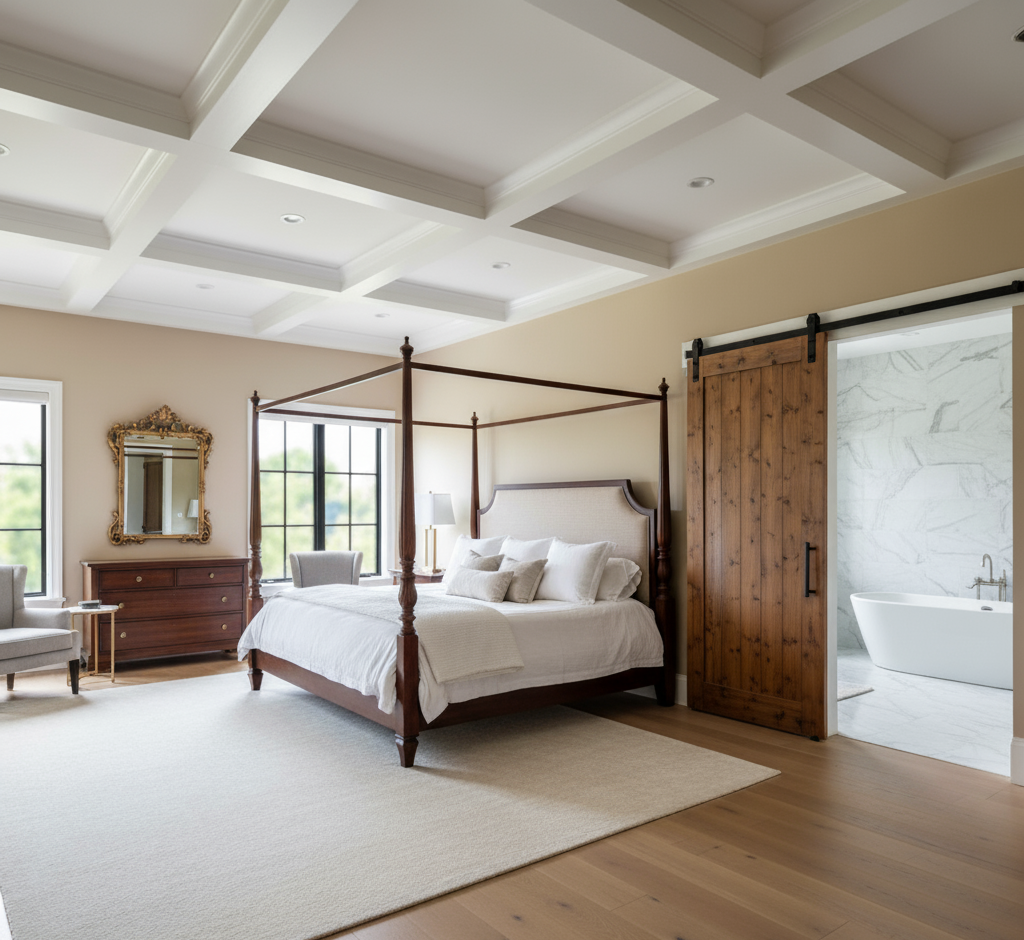
Almost across the board, bold, bright colors and soft pastels are the least popular visual styles for dream homes.
Meanwhile, quality matters, too: Over two-thirds of Americans (68%) prefer a smaller home with premium finishes over a larger home with more basic finishes, an important insight into the smaller details of their imagined dream properties.
Likewise, more than three-quarters of Americans (77%) say they’d rather have a home that’s highly functional than highly aesthetically pleasing.
Scenic Views, Outdoor Spaces Are Among the Top Dream Home Features
One of the top features Americans want in their dream homes isn’t even in the home itself: 90% want scenic views, with about a third (32%) considering it a make-or-break must-have.
Exactly what that scenic view is depends on which generation you ask. Half of boomers (50%) would like to see mountains, compared to 42% of millennials and 40% of Gen Z. Meanwhile, more than twice as many millennials (32%) and zoomers (28%) would enjoy a view of a city skyline than boomers (13%).
Otherwise, there’s broad agreement among Americans on a handful of features that nearly all would want in their dream home.
These include:
- A back patio (91%)
- Energy-efficient appliances (91%)
- A front porch (91%)
- Lots of natural light (91%)
- Open-living space (89%)
- Large or attached garage (87%)
- Fenced-in outdoor space or yard (87%)
- Home security features (85%)
When it comes to true “must-have” features, as opposed to those that are simply nice to have, the fenced-in yard scored highest (46%), followed by a back patio (45%) and a front porch (44%). It’s clear just how important outdoor spaces are to Americans, even above indoor features and improvements.
Of the 20 potential features surveyed, only three were not wanted by a majority of respondents: heated floors (45%), a pet bath/shower (36%), and an elevator (24%).
Notably, an elevator is, by far, the feature Americans would most like to avoid in their dream home. About 1 in 3 (34%) say so, 12 percentage points higher than the second most-undesirable feature, the pet bath/shower (22%).
The biggest gap between the generations is over multilevel homes: 79% of Gen Z and 62% of millennials desire this, compared to 29% of boomers, who may have concerns about navigating stairs as they age.
For what it’s worth, Gen Z (36%) and millennials (31%) are also substantially more likely to want an elevator in their dream home than boomers (18%), making those multiple levels easier to access.
Pool, Chef’s Kitchen, and Guest House Top the List of Dream Home Upgrades
Even a dream home can apparently use some extra features, according to many Americans. If cost weren’t an issue, 45% say the first thing they’d add would be a pool.
Beyond this coveted addition, about a third say they’d add:
- A chef’s kitchen (36%)
- A guest house (33%)
- Smart-home upgrades (33%)
- A spa in the master bathroom (32%)
- A home theater (30%)
As for the layout of the house, the most desired room among Americans is, perhaps surprisingly, the laundry room. An almost unanimous 97% selected this in some way, with 75% calling it a must-have. That’s 20 percentage points higher than the next highest must-have, a sign that practicality and the needs of day-to-day life may still reign, even in an imaginary dream house.
Roughly 94% of respondents say they’d like a large kitchen, but just 55% say it’s a must-have for their dream home — perhaps because they’re satisfied with a more moderately-sized kitchen, or they're imagining someone else cooking for them in their true dream home scenario.
Storage is also a heavily desired priority: 94% would like walk-in closets, and 92% say the same for dedicated storage rooms. A walk-in pantry rounds out the top five at 89%.
Three-quarters or more of Americans would also like to or need to have a finished basement (80%) or home office (78%).
When considering a dream home, many Americans don’t feel the need to stick to purely functional or realistic spaces. About a third (30%) say they’d add a greenhouse, the most common unconventional dream home space. That’s followed by a secret room (26%) and a pond (23%).
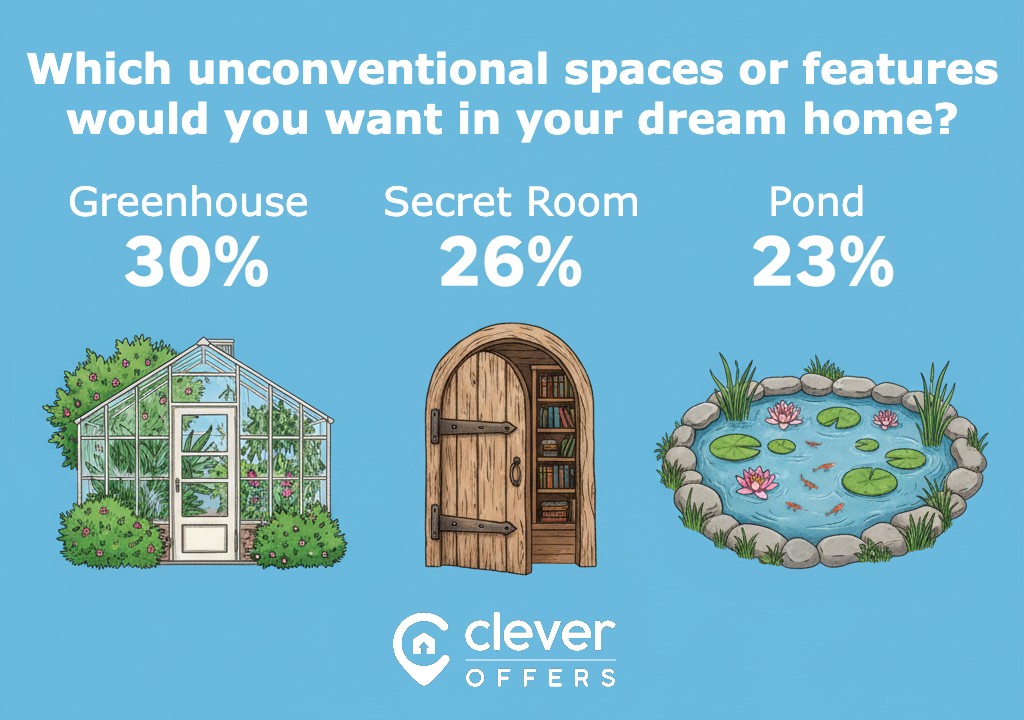
Other popular unconventional spaces include:
- A panic/safe room (21%)
- A home arcade (21%)
- A sauna (20%)
- An arts and crafts studio (20%)
- Space for animals, such as a horse stable or chicken coop (20%)
Gen Z, Millennials Want More of Nearly Everything in Their Dream Homes
When it comes to dream homes, the desires of millennials and Gen Zers tend to exceed older generations across the board. Approximately a third of zoomers (35%) and millennials (33%) say size and space are most important when choosing a dream home, compared to just 25% of boomers.
Although half of boomers (49%) say they’re likely to compromise on the interior size of their dream home, just a third of millennials (34%) and Gen Z (32%) say the same. This trend is also evident in the 47% of Gen Z and 33% of millennials who’d prefer a larger home with more basic finishes over a smaller one with premium ones. Only 27% of boomers would make this trade-off.
Although there may be some inexperience at play, younger Americans don’t seem fazed by potential maintenance nightmares. More than a third of zoomers (39%) and millennials (34%) prefer a high-end home that requires more maintenance over a low-maintenance home. Just 7% of boomers share this feeling.
In addition, boomers (96%) are more likely to want storage rooms than millennials (89%) and Gen Z (86%). The same is true for walk-in pantries: 94% of boomers would like one, compared to 88% of millennials and 77% of Gen Z.
However, younger generations desire far more rooms than their older counterparts.
| When it comes to your dream home, which of the following rooms are must-haves or nice-to-haves? | Boomers | Millennials | Gen Z |
| Attic | 60% | 65% | 74% |
| Man cave/she-shed | 55% | 67% | 65% |
| Formal dining room | 48% | 73% | 75% |
| Home theater | 42% | 61% | 63% |
| Library | 39% | 56% | 50% |
| Game room | 33% | 66% | 75% |
| Wine cellar | 19% | 38% | 47% |
At the end of the day, the desire for more of everything among younger generations may stem from one fundamental belief: 57% of Gen Z and 53% of millennials believe that owning a bigger or more luxurious home would make them happier. That’s roughly 3x the number of boomers who share this feeling (18%).
Millennials (80%) and Gen Z (63%) are also more likely than boomers (46%) to believe living in their dream home would make them more confident.
With such life-changing benefits on the line, it’s no surprise that Gen Z (38%) and millennials (34%) are significantly more likely than boomers (17%) to say they would buy a home that costs more than they could afford because it’s their dream home.
Homeowners Envision More Expensive Dream Homes, Renters Imagine Larger Ones
Renters and homeowners have very different housing situations, and those differences naturally influence what they want in a dream home. Still, these differences don’t always play out in predictable ways.
Although 58% of homeowners say their dream home costs half a million dollars or more, 62% of non-owners think their dream property is under this number. Around a third of homeowners (36%) think they’d be able to afford this in the future, more than double the number of renters who say the same (17%).
Another substantial difference between renters and homeowners is how many would prefer a custom new-build (46% of owners, 36% of renters) compared to a fixer-upper they can put their mark on (17% of renters, 11% of homeowners). It’s not clear whether this is the result of differing priorities or the experience current homeowners have dealing with maintenance and repairs.
On the other hand, non-homeowners (34%) are more likely than homeowners (27%) to say size and space are most important in a dream home.
Additionally, renters and other non-homeowners (13%) are almost twice as likely as homeowners (7%) to imagine a dream home of 5,000 square feet or more. However, these non-owners (39%) are also substantially more likely to say their dream home is under 2,000 square feet compared to homeowners (28%).
Many factors are likely at play here, from living in smaller homes to their inexperience with maintaining large properties. Others may be indulging themselves with a true dream property, rather than a more realistic one they might hope to attain someday.
Homeowners’ emphasis on quality over quantity can be seen elsewhere, too. They more commonly say style and design (20%) are the top factors in a dream home compared to non-owners (13%).
The desirability of certain dream home features can vary somewhat based on whether owners or renters are asked. Homeowners are substantially more likely to say they’d want a large or attached garage (91%) compared to renters (79%). Likewise, 82% of homeowners would want a large driveway, while only 72% of renters say so.
Homeowners (82%) are also 9 percentage points more likely than renters (73%) to prefer wood floors.
The relatively few choices where non-owners desire a feature more than current owners reveal some eyebrow-raising priorities: 63% of renters want a pool or hot tub, compared to 59% of homeowners. In addition, 30% of renters also desire an elevator in their dream home, versus 20% of homeowners.
Homeowners and non-owners are generally aligned when it comes to the biggest dealbreakers for a potential dream home, with two notable exceptions. Roughly 21% of owners see a home that backs up to train tracks or a major highway as a top dealbreaker, compared to 15% of renters.
The reverse is true when it comes to a dream home where a serious crime was committed: 22% of non-homeowners consider this among their biggest dealbreakers, while only 17% of owners think so.
This is further evidence of a trend seen throughout the survey, where current homeowners take a more realistic approach that’s likely informed by their experience, while renters are more concerned with aspirational or theoretical risks or downsides.
Methodology
Clever Offers conducted an online survey of 1,000 U.S. adults on Aug. 28, 2025. The study measured opinions, experiences, and aspirations related to “dream homes.”
About Clever Offers
Clever Offers is a platform that empowers sellers who need to sell quickly or for cash to compare their options and make informed decisions. Clever Offers' free service connects sellers with vetted cash buyers and top local realtors, allowing them to evaluate traditional cash offers alongside options such as cash offers with a second payment upon resale, listing on the MLS for as little as seven days, and standard open-market listings.
More Research From Clever Offers
FAQs
What are the most common features of an American dream home?
The most desired features, according to Americans, are a back patio (91%), energy-efficient appliances (91%), a front porch (91%), and lots of natural light (91%). Learn more.
How big is the typical American’s dream home?
Two-thirds of Americans (67%) would look for a dream home over 2,000 square feet, and nearly 1 in 10 (9%) are seeking an especially spacious 5,000-square-foot-plus dream home. Learn more.
Where do Americans most commonly imagine their dream homes?
If money were no object, Americans would most commonly pick a dream house in the countryside (44%), on the beach or the coast (41%), or by a lake (41%). Learn more.
How much does a dream home cost?
Half of Americans (50%) think their dream home would cost $500,000 or more, while nearly 1 in 5 (18%) foresee their dream property costing $1 million or more. Only 28%, however, think they could afford their dream home today. Learn more.